
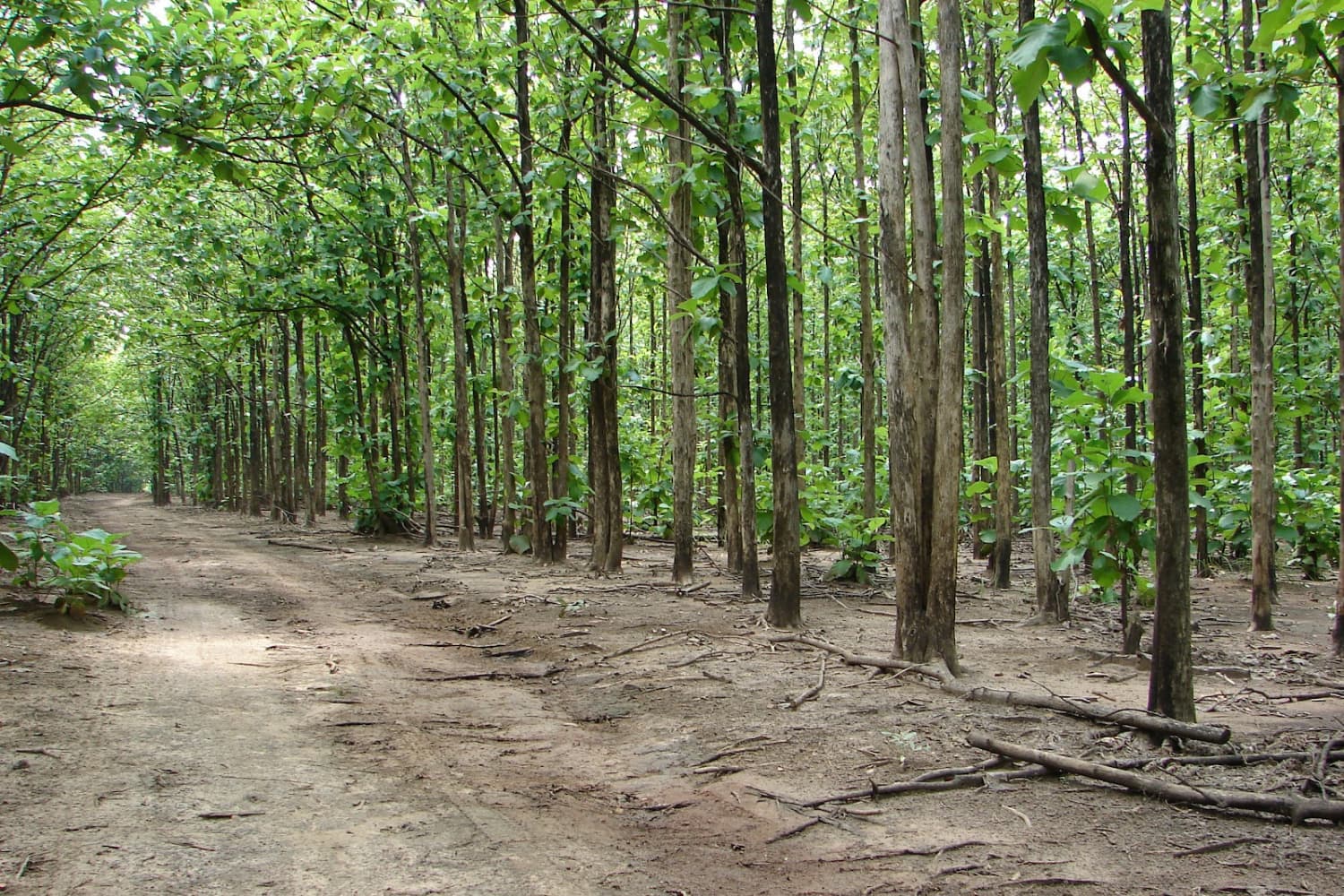

Idigbo photos on request
Ask with your enquiry and we send current photos of the stock.
Supplier & exporter in Ghana
Idigbo Wood
Terminalia ivorensis · also sold as Emire and Framire
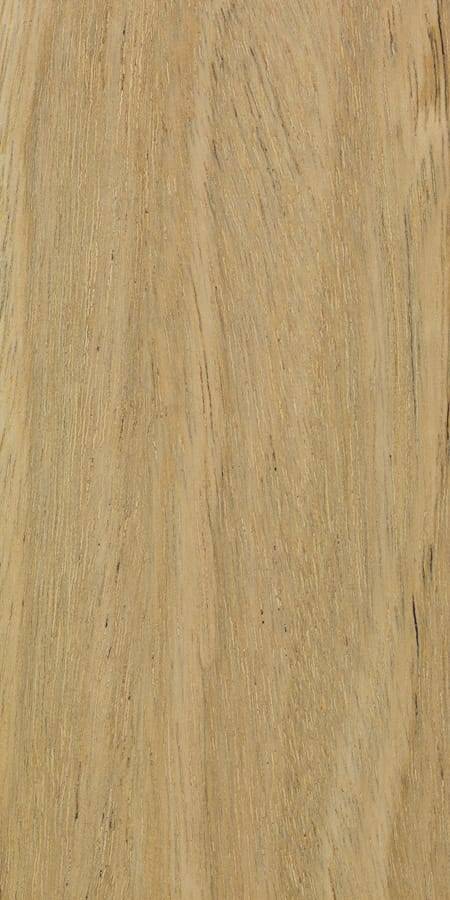
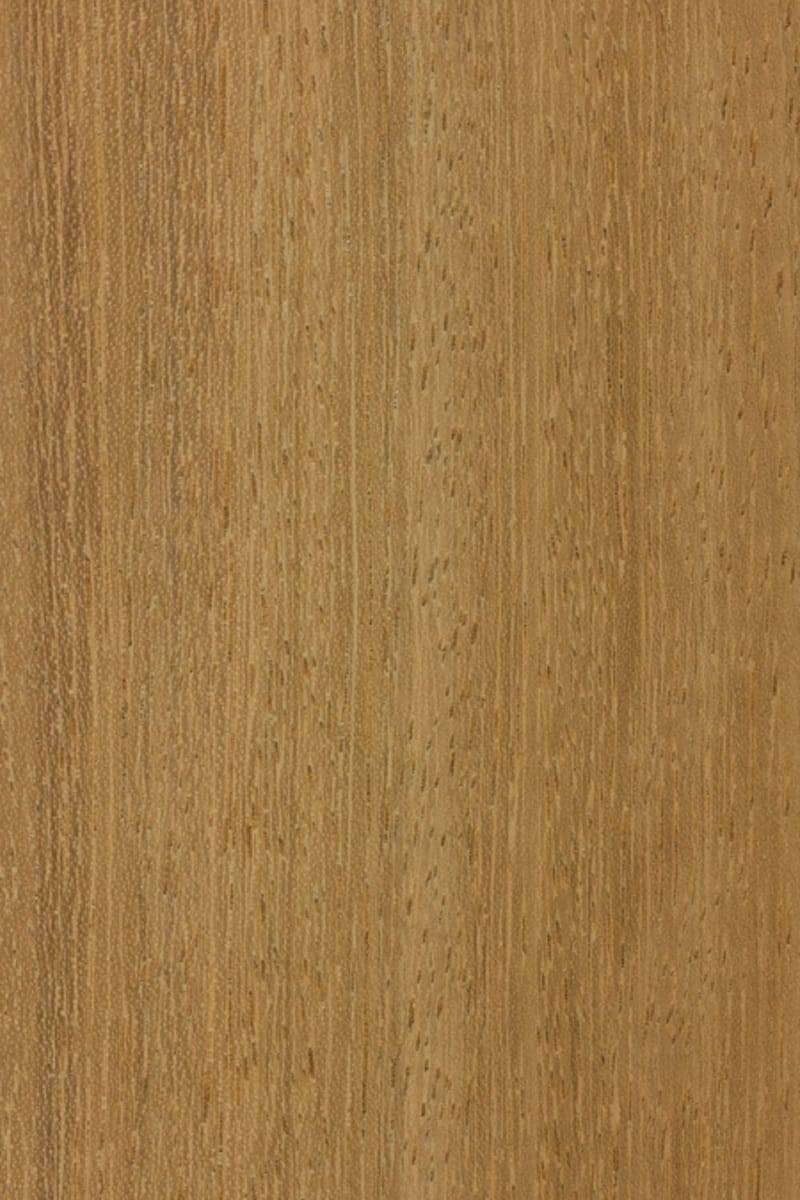
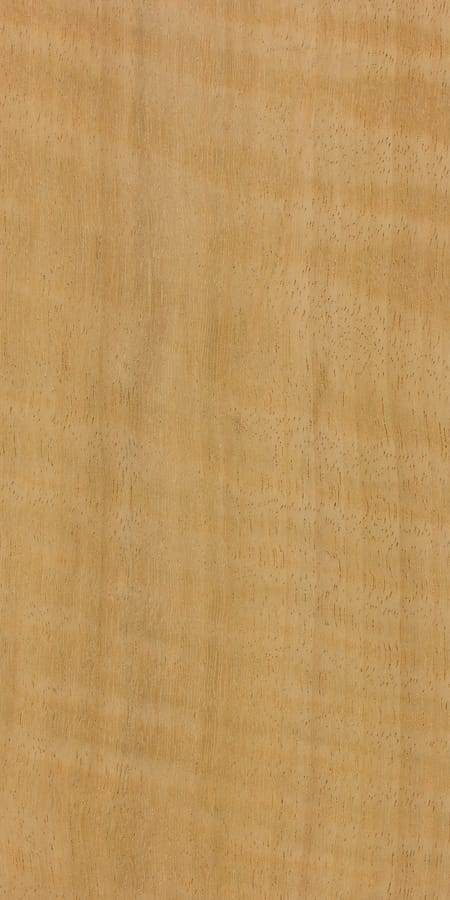
Light, yellowish brown and stable in service, idigbo is Terminalia ivorensis, which Ghana calls emire and French-speaking markets call framiré. The grain is usually straight and the texture moderately coarse. Joinery is its main use: door and window frames, interior trim, panelling, mouldings and stairs.
- Origin
- Ghana
- Terms
- FOB, CIF
- Pricing
- By quote
- Legal documents on every shipment
- Milled and exported by one team
- A reply within 24 hours, Monday to Friday
Specifications
Idigbo at a glance
- Botanical name
- Terminalia ivorensis
- Also sold as
- Emire, Framire
- Density (dried)
- 520 kg/m³
- Janka hardness
- 820 lbf
- Durability (EN 350)
- Class 2-3 (durable to moderately durable), heartwood, against fungi
- Movement (shrinkage)
- 3.6% radial · 5.2% tangential
What we supply
Idigbo forms we export
Every form is quoted to your own specification. Pick one to start an enquiry.
The supplier
Your Idigbo supplier in Ghana
Ghana Teak supplies and exports legally sourced West African hardwood to buyers worldwide. From a managed 25,000-hectare concession and select partner forests, we handle milling and export ourselves.
More about us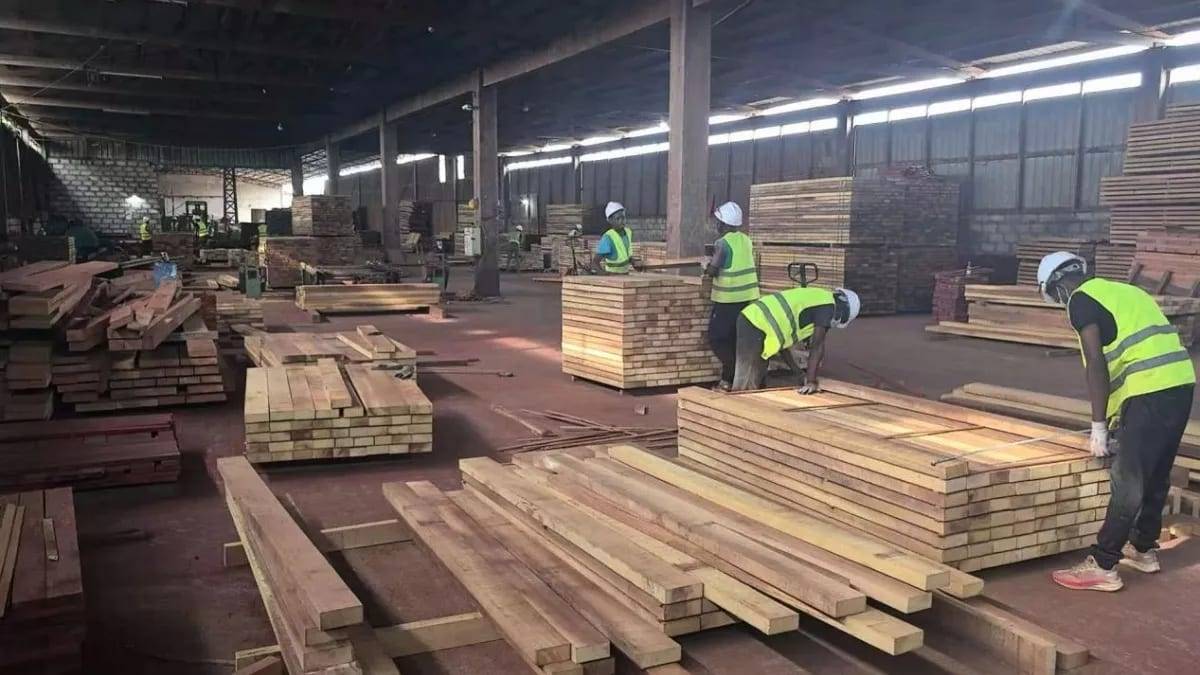

Fabian Magnago, DirectorEvery enquiry answered within 24 hours, Mon–Fri
How your order runs
- 1
Specify
Tell us the species, form, dimensions, grade, volume and destination port. The quote form and WhatsApp both reach our export team directly.
- 2
Quote
We reply within 24 hours, Monday to Friday, to confirm the specification. A firm quote follows, on FOB Tema or CIF terms.
- 3
Contract and payment
The sales contract is approved by Ghana's Timber Industry Development Division. We take payment by irrevocable letter of credit, released against verified shipping documents.
- 4
Production
Your order is milled, dried and graded to the contract specification. Independent inspection by SGS or a similar agency can be arranged before loading.
- 5
Shipment and documents
The consignment is inspected, loaded in containers and shipped from Tema with its FLEGT licence or export permit and the shipping documents.
Pricing
What moves the price
Sawn dimensions
Thickness, width band and length band each move the rate on sawn stock.
Drying
Air-dried is the standard; kiln-drying is a further operation and is priced as one.
Grade
Sawn timber is graded, and the grading system is named on your quote.
Volume
How much you order, and how completely it fills a container, both count.
Want your exact cost? Send us your specification and we return a firm quote.
Get a firm quoteApplications
Where Idigbo is used
Most common use
Door and window frames
Idigbo is first a joinery wood, and door and window frames are its main work. It is stable, with small movement once dry, and light to handle. Its natural durability covers use inside or under cover, so exterior frames are coated, with paint preferred to varnish. Keep the sapwood out and use non-ferrous fixings.
Interior joinery and trim
Interior doors, linings and trim, where a light wood that moves little is wanted.
Panelling and mouldings
Interior panelling and mouldings, and coated exterior cladding with the sapwood excluded.
Stairs and flooring
Interior stairs and domestic flooring, in a light wood that moves little once dry.
Furniture and cabinet work
Furniture, cabinet work and furniture components for indoor use.
How it reaches you
Forest to container, handled by one team
 1
Sourced
Timber comes from a managed 25,000-hectare concession and select partner forests, harvested under permit.
 2
Milled
Logs are sawn, squared or sliced to the dimensions in your contract.
- 3
Graded and packed
Each order is graded, tallied piece by piece and bundled for export.
 4
Loaded
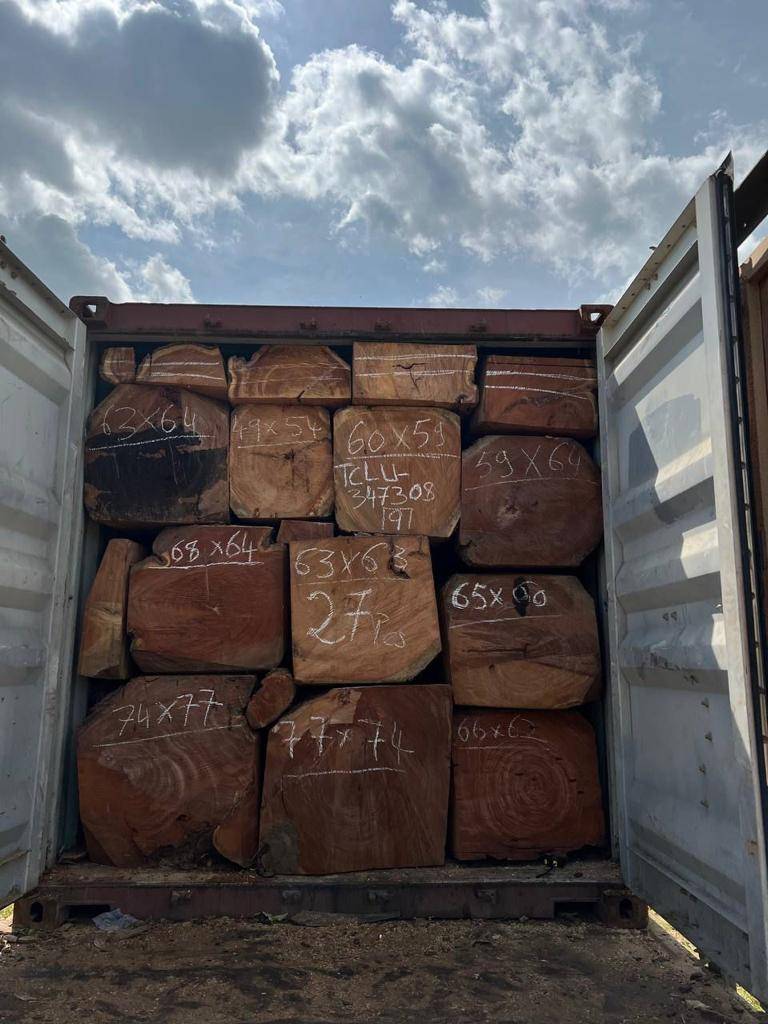
The consignment is inspected and loaded in containers for shipment from Tema.
Legality & documents
Every Idigbo shipment leaves with its papers.
Issued by Ghana's state timber authority, not by us. Buyers in the European Union also receive the origin data their EUDR due diligence needs.
Legality and documents in fullApproved contract
Ghana's Timber Industry Development Division (TIDD) vets and approves the sales contract before any timber is prepared for it.
Inspection certificate
TIDD inspects and grades the consignment against the contract and the specification sheet before it is loaded.
FLEGT licence or export permit
Shipments to the European Union travel on a FLEGT licence. Shipments to every other market travel on a TIDD export permit.
Shipping documents
Commercial invoice, packing list and bill of lading, with a phytosanitary certificate where your country requires one.
Get a quote
Get your Idigbo quote
Send the form, dimensions, volume and destination port. We reply to confirm the specification, then quote.
Fabian Magnago, DirectorEvery enquiry answered within 24 hours, Mon–Fri
FAQ
Buying Idigbo from Ghana
The questions buyers ask before a first order.
Something else? Ask us directlyHow does idigbo compare with oak?
Idigbo is lighter and more stable than European oak, with heartwood rated slightly less durable. It has long been used as a substitute for oak in European joinery. Both woods are rich in tannin and turn black against iron in damp conditions, so both need non-ferrous fixings.
What is the difference between idigbo and iroko?
They are unrelated woods. Idigbo is Terminalia ivorensis, light and yellowish; iroko is Milicia, which darkens to a yellowish or greenish brown. Idigbo heartwood is rated durable to moderately durable under EN 350, which covers use inside or under cover. Iroko heartwood is rated durable to very durable and suits exterior use out of ground contact.
Is idigbo suitable for cladding?
Yes, on conditions. The sapwood must be excluded, which takes care because it is hard to tell from the heartwood. Idigbo's natural durability alone covers use under cover, so exposed boards rely on a film-forming finish, and paint is preferred to varnish.
Is idigbo the same as framire?
Yes. Framiré is the name from Côte d'Ivoire and the one French-speaking markets use; idigbo is the name used in the United Kingdom and Nigeria; emire, also spelled emeri, is Ghana's own. All mean Terminalia ivorensis. It is a different wood from limba, Terminalia superba, which is a close relative with different properties, so quote the botanical name where a specification matters.
What is idigbo wood used for?
Joinery first: door and window frames, interior panelling, mouldings, interior trim, furniture, stairs and flooring. It also goes into exterior joinery where the work is coated and the sapwood kept out. The wood moves little once dry. We offer idigbo from Ghana as sawn timber, squares and scantlings, and boules; availability is confirmed on enquiry.
What is the minimum order?
We sell in container volumes. We do not supply retail quantities or small parcels.
How does payment work?
We work with irrevocable letters of credit, released against verified shipping documents, so neither side is exposed. The terms are set out on your quote.
Which documents come with a shipment?
The approved contract, the inspection certificate, a FLEGT licence for the European Union or an export permit for every other market, and the shipping documents.
Do you supply samples?
Yes, as part of a serious enquiry. Tell us the form and grade you are considering when you write.
How long does delivery take?
It depends on the form, the volume and whether the order is kiln-dried. We state the lead time on your quote.
Ready to price your Idigbo?
Send your form, dimensions, volume and destination. We reply within 24 hours, usually much sooner.